
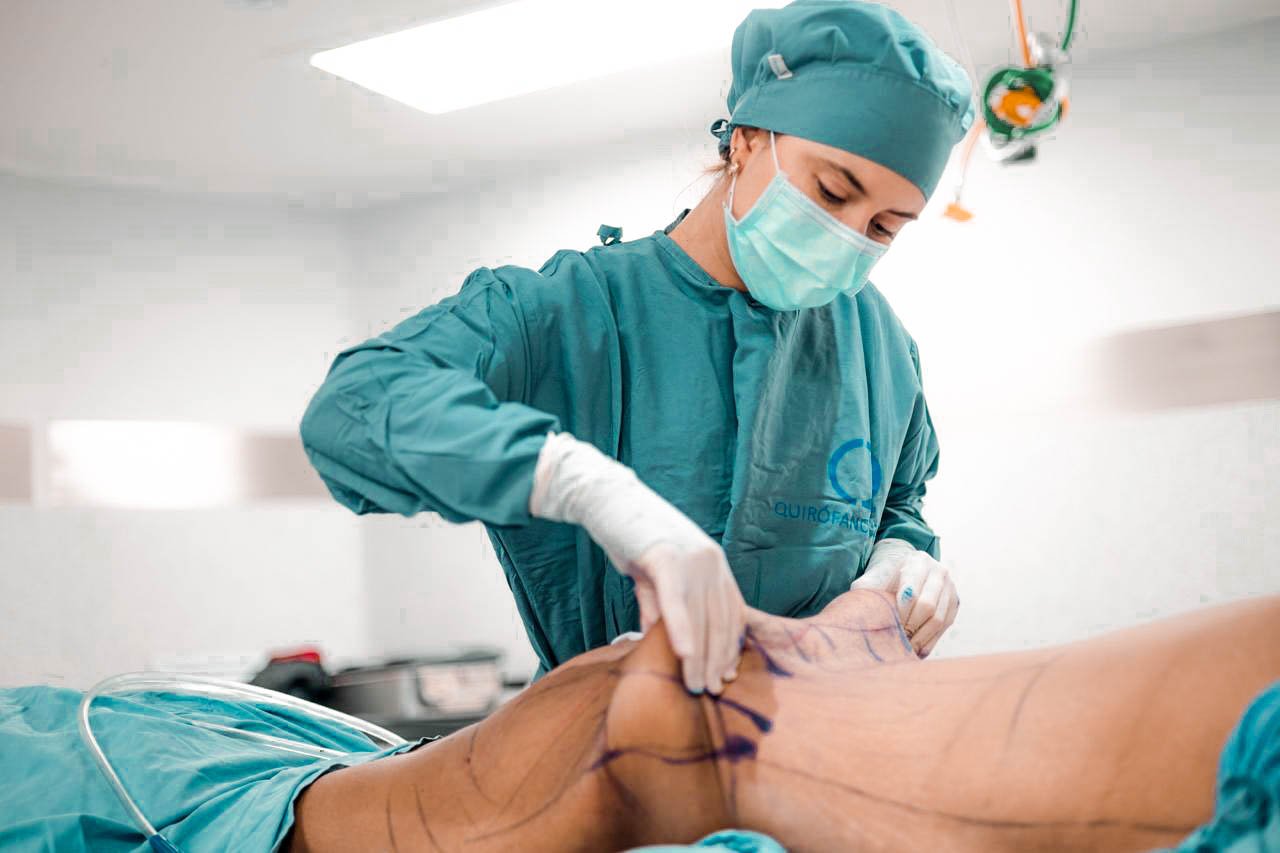
What does liposuction actually do?
Liposuction removes localized fat deposits that don't respond to diet or exercise, sculpting body contour. One important clarification: it is not a weight-loss procedure — it's a contouring procedure for specific areas, and its result depends directly on the quality and elasticity of the patient's skin.
Why isn't it always enough for post-weight-loss patients?
This is the most common misunderstanding in consultations: when skin has already lost elasticity — as often happens after significant weight loss — removing fat with liposuction without addressing excess skin can leave the area looking more lax, not less. That's why, in many post-bariatric cases, liposuction is planned as part of a combined procedure (for example, liposuction + abdominoplasty), rather than as a standalone treatment.
When can it be used on its own?
In patients with good skin elasticity and localized fat deposits — without the excess-skin component typical of major weight loss — liposuction alone can deliver excellent results. The only way to know which group a given patient falls into is through an in-person (or video) evaluation of the actual condition of the skin and tissue, not just the volume to be treated.
Recovery
Recovery from liposuction alone tends to be faster than from a combined surgery, but it still requires a compression garment, guided lymphatic drainage, and a gradual return to physical activity. When combined with another procedure, recovery timelines follow the more extensive surgery.